Choosing the right Powerful Laser can really make a difference when it comes to boosting productivity and precision in many industries. I read a report from MarketsandMarkets that says the global laser market might hit around $13.5 billion by 2025 — shows how much interest there’s growing in advanced laser tech! Dr. Richard Thompson, a leading expert in laser applications, puts it simply: “Picking the right laser is key to getting the best performance and efficiency.”
Honestly, understanding what you actually need is super important. Whether you're into manufacturing, healthcare, or scientific research, each area needs lasers with specific features. Things like wavelength, power, and beam quality really matter—but let’s be real, a lot of folks get lost in the details and struggle to figure out what kind of laser is best for them. That’s where a lot of confusion comes in. It’s clear that many users don’t fully grasp what a powerful laser can do or how to pick the right one, which is a bit of a problem.
So, taking some time to do your homework and chatting with experts—like Dr. Thompson—can save you from making costly mistakes. Even with all these new laser technologies out there, making the right choice can still feel pretty overwhelming. It’s really worth reflecting on what you actually need and seeking expert advice before you make a decision about your Powerful Laser Light system. Trust me, a little extra research can go a long way in making sure you end up with the right equipment for your goals.
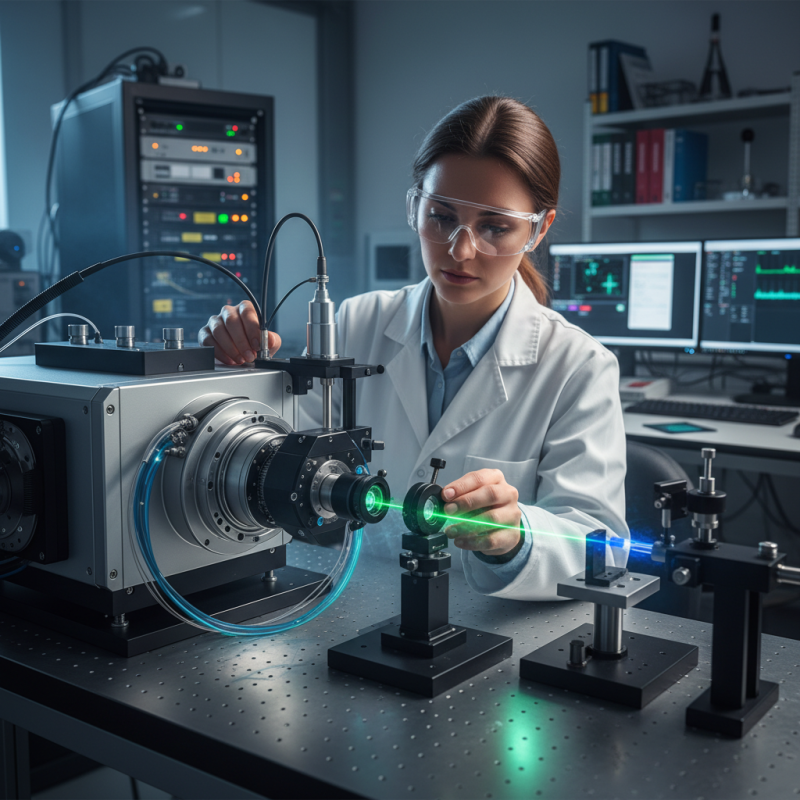
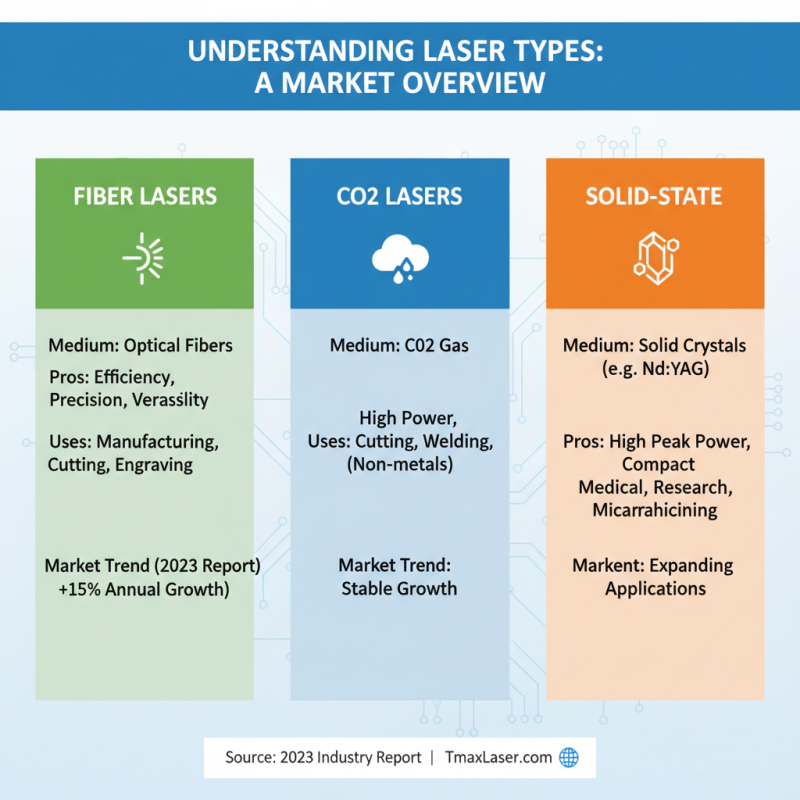
When selecting a Powerful Laser, understanding the different types available is essential. Lasers can be classified based on their medium, such as fiber lasers, CO2 lasers, and solid-state lasers. Fiber lasers have gained popularity due to their efficiency and precision. According to a 2023 industry report, the global fiber laser market is expected to grow by 15% annually, driven by their versatile applications in manufacturing.
CO2 lasers are favored for cutting and engraving materials like wood and acrylic. These lasers operate in the infrared spectrum, making them effective for non-metal materials. Reports indicate that the demand for CO2 lasers is rising in industries such as textiles and signage. However, one should note their limitations in metal processing, where fiber lasers excel.
Solid-state lasers, like Nd:YAG, offer robustness and high output power. They are often utilized for welding and metal cutting. Their versatility, however, comes with a learning curve concerning setup and operation. Industry studies highlight that 30% of users report challenges with maintenance. Selecting the right type of powerful laser requires weighing these factors against your specific needs and application.
Choosing a powerful laser for your needs requires careful consideration of several factors. Power output is critical. A higher power level often means deeper penetration for applications like cutting or engraving. For example, synthetic materials need lasers with specific wavelengths for optimal results. Knowing your project's requirements can help guide your choice.
Beam quality is another key factor. The Most Powerful Laser Light may not work well if the beam isn't focused correctly. A tightly focused beam allows for precision, especially in detailed engraving tasks. Additionally, consider the cooling system of the laser. Proper cooling can ensure consistent performance and prevent overheating during prolonged use.
Finally, safety features shouldn’t be overlooked. Lasers can be dangerous if not handled properly. Ensure the equipment has appropriate safety protocols. Reflect on your experience with different types of lasers. Evaluate what has worked for you in the past and what hasn't. This reflection can lead to better decision-making when selecting a powerful laser for your needs.
Choosing the right laser can significantly impact your projects. Assessing your specific application and requirements is crucial. Start by identifying the material you’ll work with. Different materials require different types of lasers, each with unique characteristics. For example, a Super Powerful Laser may be ideal for cutting through thick metals, while lower power lasers suffices for engraving wood.
Next, consider the intended use. Will you be using the laser for precision tasks or larger-scale operations? Precision jobs often demand more control and stability. Don't overlook the importance of power settings. A laser with adjustable power can help in various applications, allowing for flexibility. Think about the cooling system as well; it can affect the laser's performance and lifespan.
Costs also play a vital role in your choice. Balancing performance and budget is key. Reflect on the maintenance needs too; some lasers require more upkeep than others. It’s essential to weigh these factors carefully. Each project has unique demands, and your laser choice should reflect that. Ultimately, the right laser can elevate your work to new heights.
When choosing a powerful laser for your needs, evaluating power output and performance specifications is crucial. Power output is typically measured in watts or milliwatts. For precise tasks, a laser with at least 5 to 10 watts is recommended. According to a recent industry report by the International Laser Research Company, lasers exceeding 20 watts can significantly enhance cutting speed and precision.
Look closely at performance specifications. Factors like beam quality and wavelength play a vital role. Higher beam quality means less divergence. For instance, a 1064nm wavelength laser is often favored for cutting due to its efficiency with various materials. Better specifications lead to better outcomes in diverse applications.
Tips: Always verify the cooling mechanisms of a laser. Overheated lasers can lose power and efficiency. Additionally, consider the safety features offered. While opting for high-power output, ensure that there are appropriate safety measures in place to prevent accidents. Reflect on your long-term needs. Selecting an inappropriate laser can lead to increased operational costs. Consider future applications to make an informed choice.
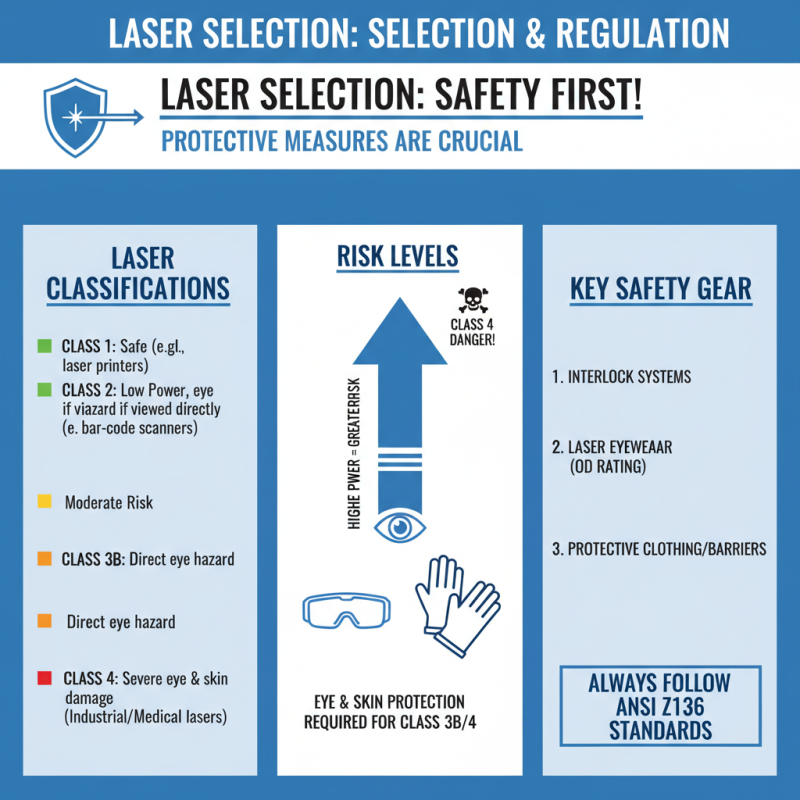
When selecting a powerful laser, safety should be your top priority. Different lasers require distinct safety measures. Familiarize yourself with the classifications of lasers, such as Class 1, Class 2, and Class 4. Higher classification levels indicate greater risks. For instance, Class 4 lasers can cause severe skin and eye damage. It’s essential to have appropriate protective gear when using these more potent devices.
Regulations add another layer of complexity. In many regions, operators must comply with safety standards. This could involve undergoing training or maintaining specific documentation. Reflect on how closely you abide by these regulations in your practice. Organizations like the Occupational Safety and Health Administration (OSHA) provide guidelines for laser safety. Understanding these regulations can help prevent accidents and ensure a safe working environment. Remember, cutting corners here can lead to serious consequences. Prioritizing safety not only protects you but also those around you.
When considering the budget for a laser purchase, there are several key aspects to reflect upon. Prices for lasers can vary widely. Entry-level models may cost a few hundred dollars. High-end lasers can reach thousands. Understanding your needs is crucial. A more expensive device often offers advanced features, which might not be necessary for every user.
It’s wise to think about long-term value. Cheaper models might require frequent replacements or repairs. This could lead to higher costs over time. Assess if you need additional accessories as well. These can significantly add to the initial price. Often, bundled deals provide savings, but read the fine print carefully.
Keep in mind potential hidden costs. Maintenance and operational costs can add up. Ask yourself: will this laser meet my needs for years? Contemplating these questions is necessary. Sometimes the allure of low prices can lead to compromises. Finding a balance between cost and quality is essential for your investment.
| Laser Type | Power (W) | Price Range ($) | Applications | Recommended For |
|---|---|---|---|---|
| CO2 Laser | 40 - 150 | 500 - 4000 | Cutting, Engraving | Woodworkers, Sign Makers |
| Fiber Laser | 20 - 500 | 2000 - 30000 | Metal Cutting, Welding | Manufacturers, Metal Workers |
| Diode Laser | 1 - 50 | 100 - 3000 | Engraving, Printing | Hobbyists, Small Businesses |
| YAG Laser | 50 - 200 | 3000 - 15000 | Medical, Industrial | Clinics, Industrial Users |
Choosing the right laser involves understanding the reliability of brands and manufacturers. The laser industry is growing, with a projected market value of $17 billion by 2025. Not all brands in this space provide equal quality. Some companies emphasize sales over performance, leading to dissatisfaction among users.
It’s essential to look for certifications and industry standards. Reliable brands often comply with ISO regulations, ensuring product quality. Customer reviews can also reveal insights into reliability. According to industry reports, around 60% of users prioritize performance over price. This suggests that investing in a reliable brand pays off in the long run.
Consider the specific needs you have for a Powerful Laser Flashlight. The applications could vary from professional use to hobbyist demands. Ratings and performance benchmarks can guide your choice. However, not every feature might be necessary for everyone. Understanding both the advantages and drawbacks of each model will help find the best fit for your unique needs.
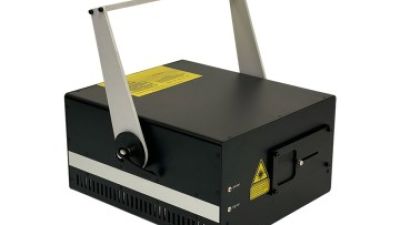
Elevate your event experience with the 10W RGB Laser Light, designed to unleash vibrant colors and exceptional performance. This powerful laser integrates a standard ILDA interface alongside a 40K high-speed scanning galvanometer, ensuring precise and rapid projection of stunning visuals. With solid-state lasers that support both TTL and analog modulation, event planners can easily create dynamic Laser Shows that captivate audiences. The exceptional purity of the laser colors allows for seamless integration with popular laser show software, enabling the crafting of elaborate displays that dazzle viewers.
One of the standout features of this laser system is its ability to create complex patterns and effects. Thanks to the advanced computerized optical system, you can transform a simple beam into multiple beams and showcase rotating designs synced to music. Whether projecting graphics onto a building façade or crafting atmospheric displays across open skies, this laser light serves both as entertainment and an innovative advertising tool. Moreover, with the option to integrate a customizable control device, users can tailor the system to meet specific event requirements, ensuring a unique and memorable experience for every occasion.
: The main types are fiber lasers, CO2 lasers, and solid-state lasers. Each type has different applications.
Fiber lasers are efficient and precise. They are increasingly used in various manufacturing applications.
CO2 lasers excel at cutting and engraving non-metal materials like wood and acrylic. They are widely used in textiles.
While robust, solid-state lasers can be complex to set up. Many users face maintenance issues.
Power output is crucial. Higher power often allows for deeper cuts and better engraving results.
Poor beam quality can hinder precision. A focused beam is critical for detailed tasks like engraving.
Effective cooling systems help maintain performance. They prevent overheating, especially during long usage.
Always check for safety features. Proper handling and safety protocols are essential to prevent accidents.
Look for certifications and customer reviews. Reliable brands often adhere to industry standards.
Many users believe so. Investing in performance can lead to better long-term satisfaction than focusing solely on cost.
When selecting a powerful laser for your specific needs, it's essential to understand the various types available on the market, each designed for different applications. Factors such as your intended use, the required power output, and performance specifications should guide your decision-making process. Additionally, consideration of safety features and adherence to regulations is crucial to ensure responsible usage.
Assessing your requirements will help narrow down the options, while evaluating budget constraints allows for a practical purchase without compromising on quality. Lastly, identifying reliable brands within the industry can lead to a successful investment in a powerful laser that meets your expectations and operational demands.